Jackie writes:
There are 13 now, numbers 1, 3 & 13 are my favorites . . .

Numbers 3 & 8 both look like they're sitting on a toilet,
or lavvy or cludgie in Edinburgh;
we called it a bog; e.g., going to the bog,
although in mixed polite company you excused yourself
saying you were going to see a man about a dog;
if you were a man, that is. Ladies just excused themselves.
I think that comes from days of old when dodgy deals
would take place in pub toilets.
We would also describe people or places that were unclean as boggin.
It could also mean unattractive, although mingin
was commonly used for unattractive or unclean;
e,g., Away ye go, plookit-faced minger.
That was NOT a compliment.
Coo or coos is the generic name for cows in Scotland;
different breeds would be a heilin coo [Highland cow, I assume]
or a black and white coo. Dogs are dugs . . .

. . . children are weans. A doo is a pigeon
and a clappydoo is a razor mussel.
I remember Tom's sister the first time I met her
asking me if I wanted to stay for dinner;
they were having clappydoos.
Sounded like a treat for them, but to me [it] translated as
a clapped-out pigeon. I always looked at Tom
and he shook his head yes or no so I could answer
without being offensive.
We have sivers in Edinburgh; they call them stanks
in Glasgow - the metal drain covers in the gutter.
A dyke in Scotland is a wall; in England it's a drain,
which in Scotland is a ditch.
That caused a lot of confusion when I first moved to The Fens.
The Fens or Fenlands in eastern England are a naturally marshy region
supporting a rich ecology and numerous species . . .
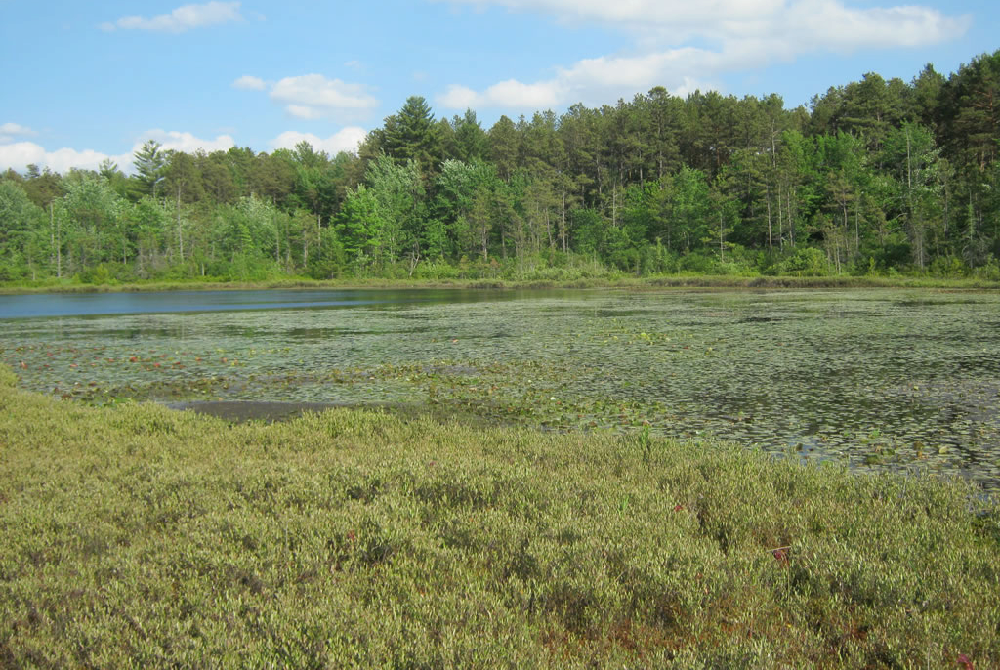
Much of the Fens was a wetland until it was drained
between the 17th and 19th centuries using artificial drainage
and flood protection. Today, the area is some of the more
productive farmland in the UK, thanks to its rich peat soil.
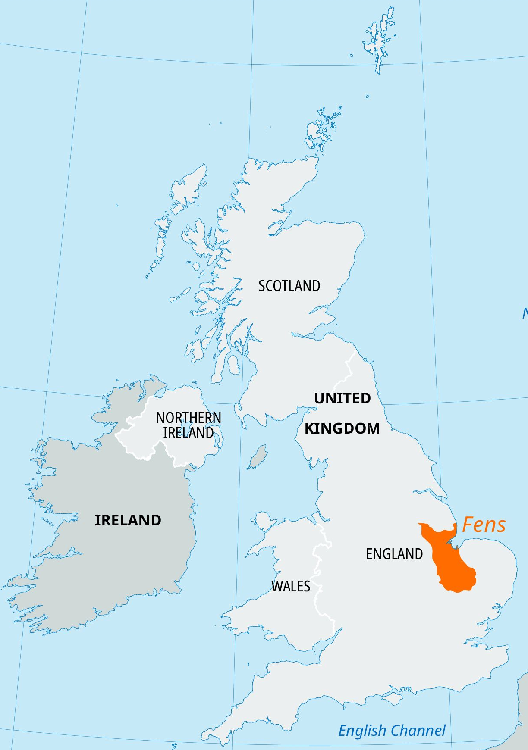
The word fen is from an Indo-European root,
but proximately comes from Old Frisian - the language
once spoken in the equally-amphibian islands off the Dutch coast.
It signifies simply a tract of low-lying land
partly covered with shallow water, or subject to flooding.
When I first joined Tom and the battalion,
I had a job in the accounts department in the NAAFI
(Navy Army Airforce Institution) - a bit like
the US commisary shops, but dearer.
It was inside the camp in Belfast and some people
wouldn't go out the camp gates.
If the shop got busy, I had to help out on the tills.
One day a boy asked, "Hey, misses, got any whitin?"
"Sorry, no. We only have cod fish fingers or fillets in the freezer."
"Naw, whitin ye ken fir ma gutties."
"Oh, whitening for your tennis shoes," I said,
trying not to sound condescending and not achieving it.
Whiting is a fish to me. Black gym shoes are rubbers;
white ones are tennis shoes. Rubbers was also the word
for erasers in Edinburgh, but rubbers are plastic pants
you put over babies' nappies in Glasgow,
long before disposable nappies arrived on the scene.
That same boy asked me for tempsytipped.
[I had] no idea. The Irish girl told me it was a pack of
ten embassy-tipped cigarettes.
From GoogleAI: What do Scots call snow?
Scottish Gaelic and Scots languages have numerous words for snow,
describing its different types and conditions,
like snaw (general snow), flindrikin (slight shower),
snaw-pouther (fine driving snow),
spitters (wind-driven flakes), feefle (swirling snow),
and mashlam (slushy snow),
showcasing the deep cultural connection to winter weather.
Last week we were in a shop and I had to ask Ann what a person
said because I couldn't understand her.
Her accent was very broad, quick and clipped.
Most Scottish people use very short sharp vowels when speaking.
I came across [the above] when searching for something else.
And I voluntary moved back here; am I nuts or something?
I've clearly had rose-coloured specs on,
remembering my youth growing up in Edinburgh,
a/k//a the windy city.
It's blowing a hoolie (wild weather or party or a good time;
e.g., we had a right hoolie last night) out there again.
The wheelie bins are banging and threatening to take off.
Scotland has not really welcomed me home with open arms.
It's been lashing rain on a daily basis, either vertical or horizontal
[with] 50 to 60 miles-an- hour winds.
Not really cold, as in not below freezing.
I'd have said baptism by fire,
but the rain would have put the flames out. I said to a couple of men
working on my driveway I felt sorry for them working out in this weather.
They replied, "Aye, well, it's the west coast you get used tae it."
I don't think I will get used to it
But I am warm and cosy in my wee house,
so I have a lot to be happy about.
|